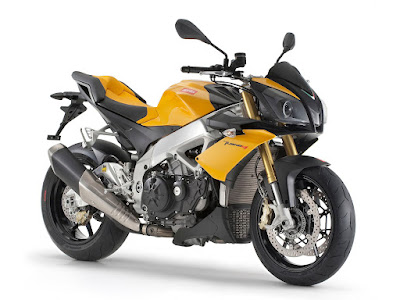
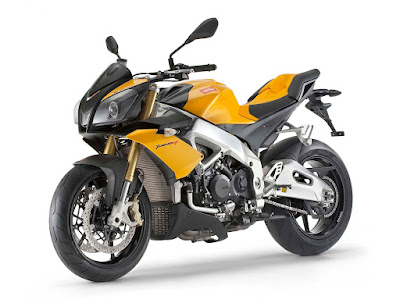
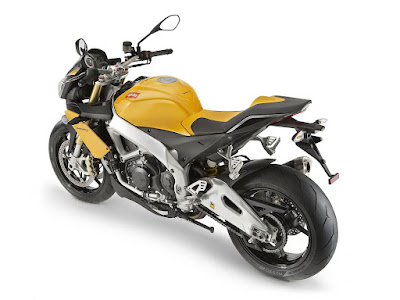
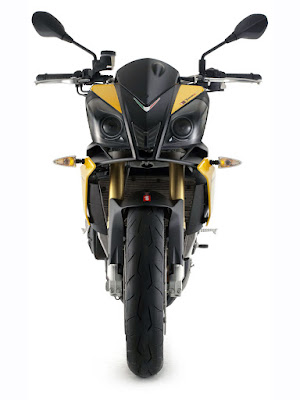
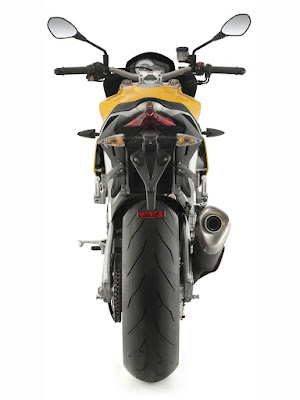
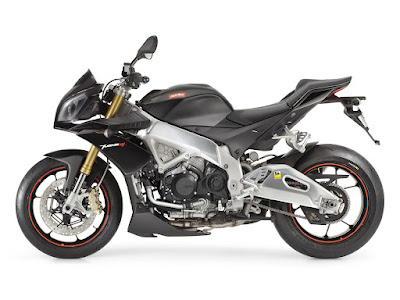
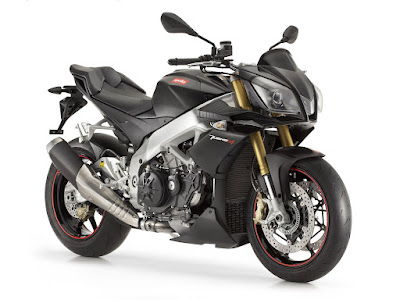
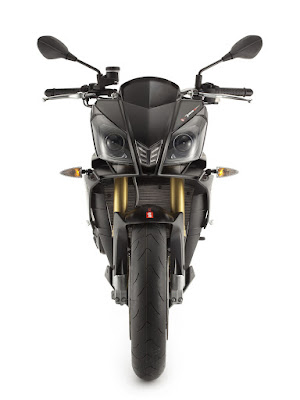
Things don’t always goes as planned around here. Sometimes motorcycle testing opportunities are missed by wide enough margins that it’s no biggie.
Other times, a good motorbike battle is off the table by merely a day or two between the return of one model and the acquisition of another. Such is the case for our time with Ducati’s 2011 Monster 796 and Aprilia’s Shiver 750. The return date of one just slipped by the pick up date of the other.
However, since these machines are so close in performance and market category, a little spec sheet jockeying and drawing on overlapping memories of riding impressions seems in order – enough to whip up a pseudo comparo!
EngineBoth two wheelers are powered by a Twin: an 803cc, air-cooled, SOHC, 90-degree two-valver for the Monster, and a 749cc, liquid-cooled, DOHC, 90-degree four-valver for the Shiver.
Despite what sounds like a lower-tech engine in the Monster, it is actually the more powerful of the two. The Ducati’s grunty low-rpm force was evident in its recent battle with Triumph’s Street Triple R. In the comparative horsepower and torque charts with the Shiver, the Monster once again shows that it isn’t a Twin to trifle with just because it lacks the latest and greatest technology.
The 796 pulls strong off bottom, and never looks back, besting the Shiver’s 44 ft-lbs of peak torque by a full 9 ft-lbs. Although the margin in peak horsepower is narrower, from roughly the 4500 rpm mark the Ducati opens a sizable gap over the Aprilia – by as much as 10 hp at certain points.
Yet the Shiver’s graph reveals it’s the bike with the smoother, more linear power development. Compared to the Ducati’s squiggly torque and hp graph lines, the Shiver’s charts look as though a laser level was used to draw them. But despite the hard numbers in the dynos, the Monster’s mill seems the mellower of the Twins.
The 796’s tall gearing (in order to meet stringent European emissions standards) somewhat hampers spirited acceleration, with the Shiver providing a revvier, more assertive engine feel. If we owned the Duc, we’d bolt on a rear sprocket with a couple more teeth to provide acceleration with extra immediacy.
The Shiver suffers from abrupt throttle response when in Sport mode, but so does the Monster. As seems typical for a lot of modern Ducatis, the Monster 796 is equally as guilty of jerky acceleration at small throttle openings.However, with the Aprilia a rider can mitigate the abruptness without losing any peak power by switching over to Tour mode. In case you’re unaware, the Shiver offers three rider-selectable engine mappings (Sport, Tour, Rain). No such mechanism exists on the Duc.
As noted in the Monster’s initial review, its gearbox was Notchy (that’s notchy with an N). But the 796 got a passing grade in light of the fact that it likely received no break-in time before it was turned loose into the media test pool. Also, its APTC slipper-type clutch is a functional asset.
The Aprilia cannot claim a slipper clutch, but its six-speed transmission is otherwise smooth and trouble-free.
Chassis
Just as each of these naked middleweights are motivated by Twins, they each also hold their powerplants with a frame combo of steel-tube trellis joined to aluminum side pieces. The Monster’s frame is predominantly trellis, and, frankly, the more attractive of the two frames.
Suspension components are similar for each bike.
The Ducati sports a 43mm inverted fork where the Aprilia utilizes a 41mm inverted unit, but neither fork offers any type of external adjusters. That said, each fork works quite well. Good damping and bump compliance is a testament to tuning work the manufacturers did before finalizing spring rates and damping performance.
Each bike’s shock provides for spring preload adjustment along with the ability to tweak rebound damping. And, as with the fork sets, both shocks perform adequately.
No question each bike is a genuine treat to twist through the bends, however, when the pace picks up, the 796 remains surefooted and stable throughout the turn. The Aprilia may protest with a wiggle or wallow at the back end.
But take these comments on Aprilia’s occasional wobble at speed with a grain of salt. It’s a matter of splitting hairs, really. As ably as the Ducati tracks through serpentine tarmac, the Shiver probably meets the Duc’s standard by 90%, if not more.
For 2010/11 the Shiver’s rear wheel is half an inch narrower than the previous model year’s 6.0-inch wheel – one of a number of updates to the current Shiver. The new, narrower wheel reshaped the 180/55 x 17 Pirelli Diablo Corsa III rear tire to better match the front tire’s profile, which in turn gives the Shiver linear, predictable steering.
The Shiver has a marginally shorter wheelbase (56.6-inches vs. 57.1-inches) while the 796 counters with a shallower 24.0-degree rake compared to the Shiver’s 25.7-degrees. Regardless of differences in geometry, each naked Standard provides sporty, nimble steering.
Going up against the name Brembo (what the Duc wears) is always tough, but the Shiver’s Aprilia-branded binders go tit-for-tat in terms of ultimate stopping power. Also, as part of the Shiver’s upgrade package, it was graced with wave-type rotors. Braking excellence is almost a dead heat ‘tween this pair, but the Duc impresses more for its overall better sensitivity at the lever.
Ergos ‘n’ Stuff
If you’re familiar with the Monster 696 or 1100, then you’ve got a pretty good feel for the 796’s layout even if you haven’t ridden it yet.
The Monster’s rider triangle is pretty darn comfortable. It’s saddle is broad with supportive foam density, and pegs are rear set enough that it takes some serious lean angle to start scraping.
But reach to the Duc’s one-piece, tapered aluminum motocross-style handle is more forward than the position the Shiver places its rider in.
Although changes to peg placement, seat width and handlebar height ostensibly have given the Shiver a more aggressive rider ergo package, it seems to offer a more open and upright position compared to the 796. Yet it gives up nothing to the Monster in terms of sport riding.
Seat height is basically a wash with 31.5 inches for the 796 and 31.8 inches for the Shiver.
Mr. Monster wears a hi-tech dashboard kit with its all-digital single-unit LCD panel. It’s essentially the same unit found on Ducati’s high-end superbikes. Unfortunately, the 796’s all-LCD bar graph tachometer can at times seem difficult to read, like during midday sun.
Pretend Shootout Conclusion
These I-talian sleds weren’t ridden back-to-back on the same day, but that doesn’t prevent one simple conclusion: each one is a doggone good bike.
The Shiver’s Twin provides tractable power, belying peak power deficits to the Ducati. And the Shiver also has the features of rider-selectable fuel mapping and true throttle-by-wire. You’ll have to decide if the Aprilia’s electronics are bona fide benefits, but for sure they are the way of the future.
Aprilia graced the Shiver with worthwhile improvements to handling this year, and it also has what feels like a slightly more neutral, upright riding position compared to the Duc.
On the other hand, the Ducati is, well, a Ducati. Nowadays that name is golden whether you’re a real rider or a style-conscious diva.
The Monster 796 package presents a strong Twin, stable chassis, user-friendly ergos, easy effort at the clutch lever (albeit with a chunky transmission) and sex appeal – all for a $996 premium above the Shiver’s $8,999 MSRP.
Once again, despite our best efforts to discern a clear winner amongst modern two wheelers wedged in the same category, all that’s left to say is: six of one, half dozen of another.